What to Buy in Bali: Top 20 Things You Should Not Leave Without
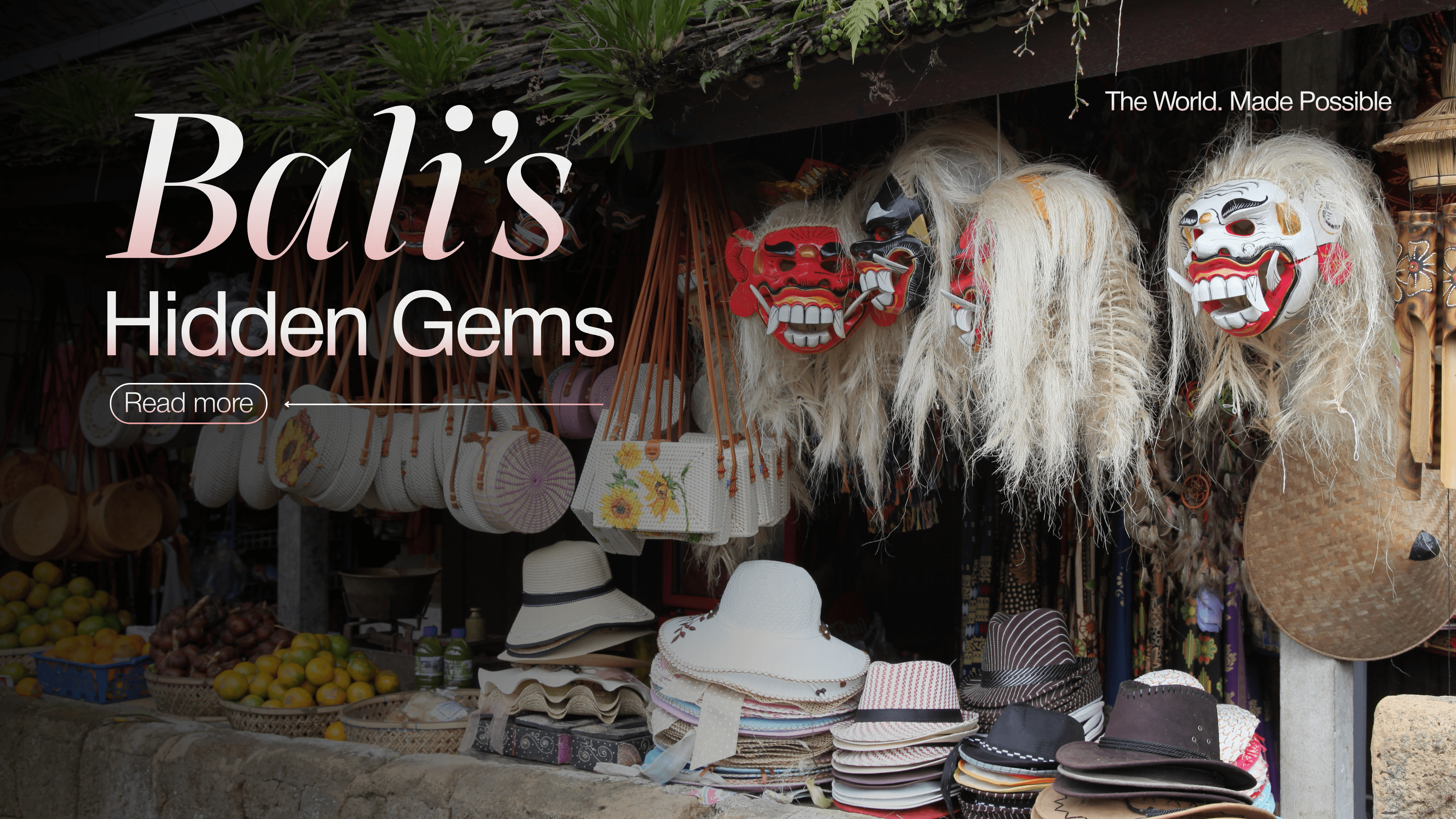
Bali does something to people. You land expecting beaches and rice terraces, and yes, those are absolutely there. But then you wander into a market in Ubud on a Tuesday morning, or stumble into some tiny workshop down a lane in Seminyak that has no signage and no Instagram presence, and three hours vanish. Your bag gets heavier. Your wallet gets lighter. And genuinely, you do not mind.
That is the thing about shopping in Bali. It is not a mall experience. Nobody is running a loyalty programme. What you are doing is closer to treasure hunting, except the treasure was made by hand, often in the same village, sometimes by the same family, for several generations. The things you bring back carry actual weight. Not just in your luggage. In the other sense, too. Before you travel, understanding Indonesia visa requirements can help you prepare for a smoother trip to Bali.
This list covers twenty things worth buying. Honestly assessed. No filler.
1. Batik Fabric and Clothing
Real batik is a process, not just a pattern. Wax gets applied to fabric by hand, the fabric gets dyed, the wax gets removed, and then it starts again. Multiple rounds. Days of work for one piece. What you get at the end has a particular quality to it, slight colour variations, small irregularities, the kind of thing that makes it clear a human being made it and not a machine.
Machine-printed batik is everywhere in Bali, and it is considerably cheaper. The easiest way to tell the difference is by touch. Run your fingers across the surface. Handmade batik has texture and variation. Printed batik is smooth and uniform. Buy the one with texture.
2. Silver Jewellery from Celuk
Twenty minutes from Ubud. That is where Celuk village sits, and it is worth going there specifically rather than buying silver from resort shops, which is where the same pieces end up at triple the price.
Families in Celuk have been working with silver for centuries, not as a hobby. As the actual livelihood of the village, passed from parent to child so consistently that the skill is essentially part of the local DNA at this point. Filigree rings, pendant work and earrings with more detail in them than seems physically possible given their size. Buy directly from the workshops. Cash preferred.
3. Wood Carvings
Mas village is where this happens. Walking through Mas for the first time is a bit disorienting because the quality of what is just sitting in open workshops along the road is extraordinary. Garuda sculptures. Barong masks. Abstract bowls with carving so detailed you keep looking for the machine mark and not finding one.
Ask what the wood is. Hibiscus, jackfruit and teak are the ones worth having. And ask how long it took. A good craftsman answers that question immediately and with some pride. That answer also tells you whether the price being asked is reasonable.
4. Balinese Paintings
The style is distinctive. Dense compositions, figures from Hindu mythology packed into scenes with extraordinary detail, earthy tones that somehow feel both ancient and vivid. The Ubud art market has accessible options. For better work, the studios and galleries around Ubud town are the right move. Some artists will let you watch them paint. Worth doing even if you end up not buying anything. Watching someone work at that level is its own experience.
5. Handmade Paper Products
Mulberry bark paper. That is what Balinese handmade paper typically comes from. The journals, photo albums, and stationery made from it have a particular texture and warmth that mass-produced equivalents simply do not. They are also flat and light, which matters when you are already negotiating luggage weight on the way home. The Pondok Pekak area near Ubud has good options.
6. Kopi Luwak and Balinese Coffee
Balinese coffee is genuinely good and quite different from what most Indian coffee drinkers have encountered. Bold, earthy, with fine grounds that settle at the bottom of the cup. You drink until you feel resistance, and then you stop. That is just how it works.
Kopi Luwak is the famous civet coffee. Available everywhere. Here is the thing, though. Some farms treat the civets well. Some absolutely do not. If you are buying it, ask directly where the beans come from and whether the animals are wild or caged. A straightforward question. The answer tells you what you need to know.
7. Coconut Shell Products
Bowls. Cups. Spoons. All carved from coconut shell, all completely natural, all finished to a standard that would cost considerably more in any home goods shop back in India. They are also surprisingly durable. People underestimate them because of the price, and then find them still in daily use three years later. Great gifts for people who appreciate things that are actually made from something.
8. Balinese Sarongs
Every temple visit requires one. You will get handed a sarong at the entrance if you do not have your own, but buying one at the market beforehand is smarter and cheaper. Good Balinese sarongs come in cotton or silk, in colour combinations and patterns that are genuinely lovely, and they are versatile enough to use as a beach cover, a scarf, or actual clothing once you are home. The ones sold at temple gates cost more, and the selection is worse.
9. Essential Oils and Aromatherapy Products
Frangipani. Ylang ylang. Sandalwood. Lemongrass. Bali takes its wellness culture seriously, and the aromatherapy products that come out of it reflect that. The quality at dedicated aromatherapy shops sits noticeably above what airports sell. Taksu Spa in Ubud produces its own range worth looking at. Utama Spice has been making natural beauty products on the island for decades now, and their consistency shows. Check the ingredient list before buying. Natural ingredients only, not a hard standard to meet, but worth confirming.
10. Rattan and Wicker Items
Rattan bags have become genuinely fashionable globally, and Bali is where a significant portion of the good ones are actually made. Properly constructed rattan outlasts most machine alternatives at similar or lower price points. Seminyak and Kuta markets have solid selections. If you find yourself near Tenganan, one of Bali's oldest traditional villages, look for Gringsing fabric. Double-ikat weave, extraordinarily rare, genuinely collector grade. Not cheap, but the real thing.
11. Balinese Spa Products
Lulur body scrubs. Boreh herbal rubs. Coconut oil hair treatments. Balinese spa culture has built its own specific product language over many years, and most of it travels well in packaged form. These make sensible gifts because they are useful and because they carry the association of something specific, Balinese wellness traditions, that people respond to positively.
12. Ceramic and Pottery
Pejaten village in South Bali. Hand-thrown work with a rustic quality that looks nothing like the machine-perfect ceramics most people are used to. Bowls, plates, decorative tiles and garden pieces. The irregularity is the point. These things look handmade because they are. Fragile to transport, so wrap them well and keep anything you care about in hand luggage rather than checked bags.
13. Traditional Balinese Masks
Used in dance and ritual performance, each design carrying specific meaning within the Balinese Hindu tradition. The Barong mask. The Rangda. Topeng character masks. The best ones come from pule wood, which is considered sacred. Mas village has the best craftsmen and the best selection. What you find there is different in quality from what gets sold in tourist shops closer to the beach areas.
14. Vanilla
Bali grows it well and sells it cheaply. Considerably cheaper than anywhere you will find it at home. Pods, extract, powder, all available from spice markets. The Ubud market is reliable. So are the spice shops along Monkey Forest Road. Check the pods before buying. They should be plump and slightly flexible. Dry and brittle means old stock.
15. Balinese Textiles Beyond Batik
Endek is what you are looking for here. Traditional Balinese fabric, weft-ikat technique, geometric patterns with a subtle luminous quality that photographs never quite capture accurately. Used for ceremonial clothing traditionally, increasingly used in contemporary Balinese fashion design. A length of good endek is a distinctive gift, the kind of thing that does not get forgotten in a drawer.
16. Incense and Incense Holders
Temple incense in Bali is not the same category of thing as the incense sticks most people have burned elsewhere. The scent is layered and complex, and it lingers properly. Takes over a room in a way that cheap incense aspires to but does not achieve. Stone and wood incense holders are available everywhere, cost almost nothing and pack flat or small. Easy decision.
17. Surf and Beachwear
Kuta and Seminyak are where this happens. Billabong and Rip Curl run factory outlets there at prices well below what the same items cost at home. Beyond the international labels, local Balinese surf brands produce genuinely good quality at even better prices. Deus Ex Machina in Canggu is worth visiting even if surfing is not your thing. The shop itself is an experience.
18. Handmade Sandals
Small shops in Kuta and Seminyak, rows of them. You choose the style. You choose the leather. They make the sandals in front of you, sometimes within an hour. The quality holds up. The price is low. And there is something quietly satisfying about wearing something made to the specific dimensions of your feet.
19. Musical Instruments
Gamelan instruments, flutes, seed shakers, singing bowls. These are not decorative versions of musical instruments. They are actual instruments made by people who play them. Small pieces are manageable travel purchases. Anything larger is a logistical commitment that deserves serious thought before you commit. A full gamelan set is beautiful, but your airline has opinions about it.
20. Balinese Cooking Ingredients and Spice Pastes
Base gede. Bumbu Bali. Dried kaffir lime leaves, galangal and candlenut. Buying the actual ingredients to cook what you ate in Bali when you get home is one of those travel decisions that keeps paying off for months afterwards. Most of it is vacuum-packed and gets through airport security without issue. The Ubud spice market is where to buy it.
Before the Shopping Starts: Your Bali Visa
Indonesia offers a visa on arrival for Indian passport holders at Bali's Ngurah Rai Airport. Which sounds fine until you land during peak season and find the queue stretching back far enough to genuinely test your patience after a long flight. The process needs USD cash at the counter. Any documentation issue gets sorted standing in that queue. Not a great situation.
Getting an Indonesian e-visa sorted before you leave India is the smarter approach by a considerable margin. DU Global handles this through their DuVisas platform, and this is core to what they do, not a travel agency side service. They are listed on the National Stock Exchange of India and operate specifically in the visa facilitation and digital services space.
Over 35 centres across 6 countries. Access to around 1,300 partner offices globally. Official visa application partner to multiple embassies and governments worldwide. In India specifically, centres in Delhi, Mumbai, Kolkata, Chennai, Bangalore, Guwahati, Silchar, Siliguri and Bongaigaon. ISO/IEC 27001:2022 and ISO/IEC 27701:2019 certified for information security and privacy management. When you hand over passport copies and financial documents to any organisation, those certifications are worth checking for.
Standard tourist visa for Indian travellers allows 30 days in Indonesia with extension options available inside the country. Apply at least two weeks before travel. Keep your documents, passport, photographs, return ticket and accommodation details consistent and well-organised before you submit.
Bali shopping rewards the person who wanders slowly and pays attention. The best things are not in the most visible places. They are down the lane without a sign, in the village market that opens at six in the morning, with the silversmith who has been doing this for forty years and does not need a storefront to find customers. Give yourself time to find those places. Your luggage going home will be heavier for it, and your home will be better for it.
FAQs
Q1. What is the best thing to buy in Bali on a tight budget?
Coconut shell products, incense, vanilla pods and small batik pieces. All excellent quality, all very low cost. If the budget stretches slightly further, handmade leather sandals from Kuta or Seminyak are hard to beat for value.
Q2. Where in Bali should you shop for genuine handicrafts?
Ubud for most categories. The art market, the workshops along Monkey Forest Road, and the nearby villages of Mas, Celuk, and Batuan, between them, cover woodcarving, silver, painting, and textiles at a quality level the resort areas simply do not match.
Q3. Do Indian passport holders need a visa for Bali?
Visa on arrival is available but involves queuing, USD cash, and no margin for documentation problems after a long flight. applying for an Indonesian e-visa in advance through DUVisas can help make your travel preparations smoother, with support for documentation and the application process.
Q4. Is bargaining normal in Bali markets?
In open markets and smaller independent shops, yes. Start around fifty to sixty per cent of whatever opening price is quoted and negotiate from there. Established boutiques and fixed-price shops do not bargain. Read the context before you try. And do not push hard on prices for things that are clearly handmade and already inexpensive. Someone spent real hours making it.